



How to Tune a Woodrow
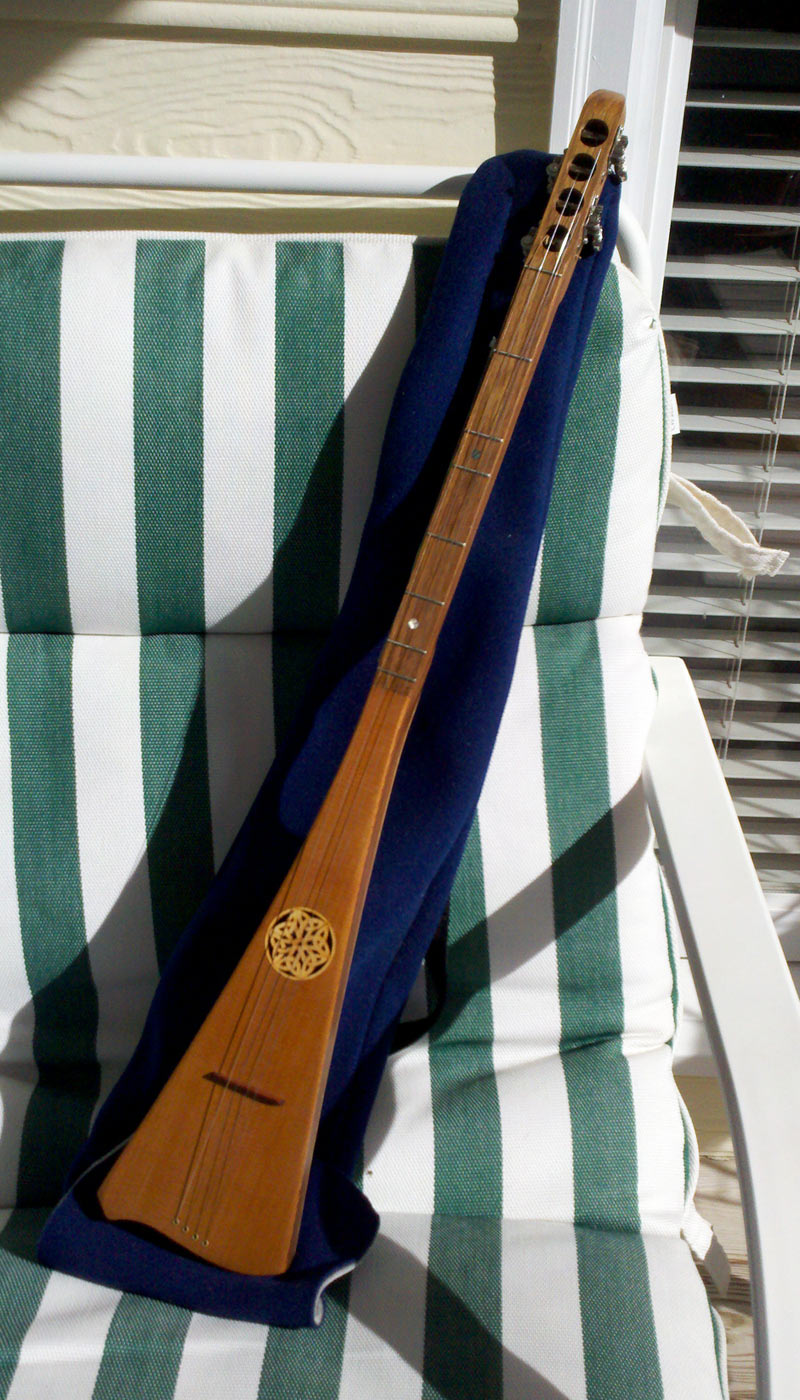
A woodrow is a fun little string instrument hailing from the Appalachian Mountains of the USA. It is a cross between the dulcimer and the banjo. The woodrow used in bluegrass, celtic, and even in blues. Its droning sound is captivating and it is fairly easy to play. Now that you have one, you might be puzzled about how to tune it. One of the fun things about a woodrow is that there are many different ways to tune it. This gives it many different sounds and allows you to play your woodrow just about any way you want to play it. We are going to look at three different ways to tune your woodrow. Some woodrows have three strings and some have four; we'll talk about tuning both kinds.
First let's talk about the notes you will need. When you tune your woodrow you will want to know the first, third and fifth notes of the key you will be playing in. How do you figure out the key and the first and fifth notes of the key? Here are some handy tricks to help you determine this. The key is oftentimes the last note of the song. So if the song ends on a G, the song is in the key of G. If the song ends on a D, the key is - you've got it - D. Now that you know the key, you can count out the notes of the key on your fingers and get the first (also called the root note), third and fifth notes in that key. So for the key of G, count out on your fingers G-A-B-C-D. The first note (root note) is G, the third note is B and the fifth note is D. If you are playing in the key of D, count D-E-F#-G-A. The first note (root note) is D, the third note is F# and the fifth note is A. (Don't worry if you didn't know F from F#, that's why I am telling you about it.) We will be using these notes for tuning the woodrow. You can get these notes from a keyboard or from the online guitar tuner on this website. Just click on the note to hear what it sounds like and turn your tuning peg tighter to raise the sound or looser to lower the sound.
One of the most common ways to tune a woodrow is to tune it to the first (root) and fifth notes of the key you are playing in. For a three-string Woodrow the two outer strings are tuned to the first (root) note of the key and the middle string is tuned to the fifth note of the key. You will play the melody on one of the outer strings. For a four-string woodrow, tune the string that's closest to you and the two furthest strings to the first (root) note of the key. Tune the remaining string to the fifth note of the key. You will play the melody on the two outer strings that are tuned to the first (root) note of the key.
Another way to tune your woodrow is to tune the middle string to the root note and tune one of the other strings a fifth above the root note and the other string a third above the root note. Tune the third string to a third above the root note. That means if you are in the key of G you tune the middle string to G, the second string to B and the third string to E. These notes are all on the online guitar tuner on this website. For your four-string woodrow tune the three strings closest to you the same way as for the three-string woodrow and tune the furthest string to the root note.
A third way to tune your woodrow is to tune it to the last three strings of your favorite instrument using the online tuners on this website. If you already play an instrument, this is a fun way to expand your sound without any major adjustments. If you have a four-string woodrow, tune the two furthest strings to the same note.
These are the three most common ways to tune your woodrow. You can tune it differently depending on whether you are playing by yourself or with other people, whether you are playing the main melody or accompanying others. You can tune it to play in a certain key or you can tune it to mimic an instrument you already know. Experiment and see what you come up with and enjoy your woodrow!
Written by Suzanne Flaherty



Thank you. I find this very helpful.
Why don't they have a tuner for the Woodrow like a guitar tuner? If there is where is it? Thanks
On the 4string the E is a maj. 6th of the key of G ?
this website just tells you how to tune instruments not the tone of your instrument. that's what it does!
Please provide a simple layout of tuning iterations. You have monopolized Google’s SEO algorithm and need to provide simple and accessible tools for someone that knows nothing about anything musical, like me. That’s why I bought a tuner and Woodrow. I just want to play and listen.
Whatever
Most worthless instructions ever. Thanks for whatever!,,,
yayayayayayaayayayayayayayayayayayayayayayayayayayayayayayayayay-ayay-ayayayayayayayayayay-ay-ay-ay-ay-ay-a
blah
FDA hates you
It is dumb
Packers and Movers India
Thanks for post this helpful post Please visit for More information about -
Mumbai Packers and Movers @
http://www.expert5th.in/packers-and-movers-mumbai/
Bangalore Packers and Movers @
http://www.expert5th.in/packers-and-movers-bangalore/
Hyderabad Packers and Movers @
http://www.expert5th.in/packers-and-movers-hyderabad/
I love to play the woodrow, it is such a erotic instrument.